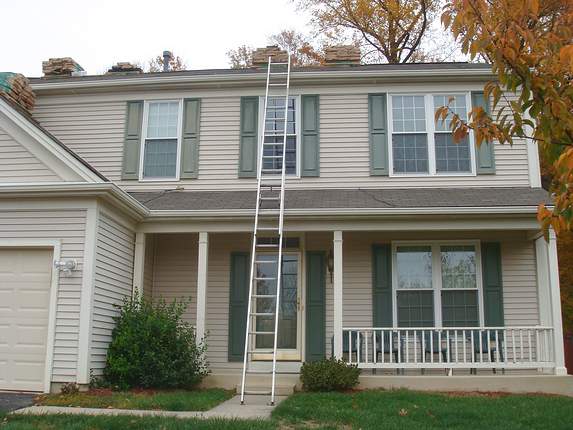
  New Roof Upper Marlboro, Maryland: This home was ready for a new
roof; and since the existing roof shingles were very flat (as opposed to curling), one of the
options available was a roof over. Only about 10% of the roofs that I inspect actually
qualify for a "roof over". New Roof Upper Marlboro, Maryland: This home was ready for a new
roof; and since the existing roof shingles were very flat (as opposed to curling), one of the
options available was a roof over. Only about 10% of the roofs that I inspect actually
qualify for a "roof over". |
|
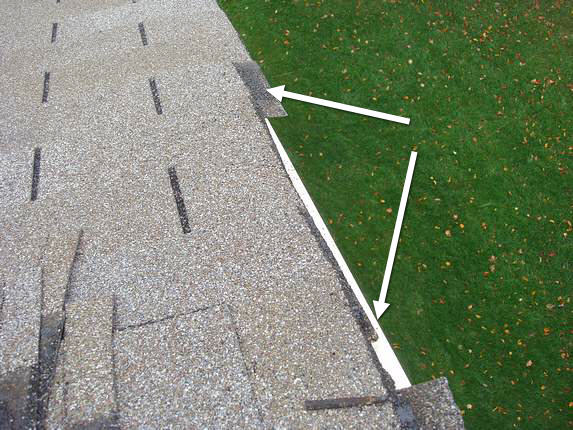  Shingle Rake
Edges: When doing a "roof over" we always cut back the existing
shingles so that only the newly applied shingles can be seen from the ground. Shingle Rake
Edges: When doing a "roof over" we always cut back the existing
shingles so that only the newly applied shingles can be seen from the ground.
|
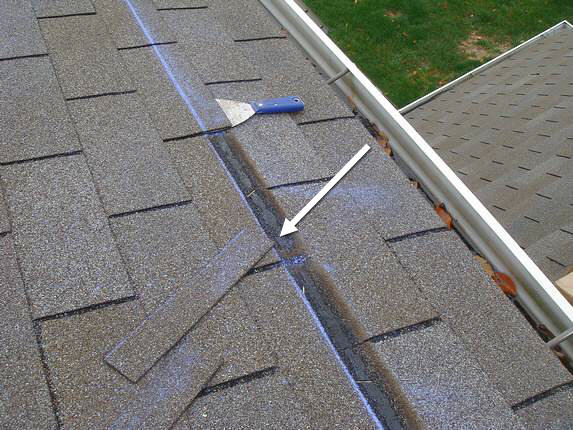 Cutting the third
Course of Shingles: This is a "super secret" technique that I use to flatten out the first couple
of new courses of shingles when installing a re-roof. Well, maybe it's not such a secret
anymore; but that's OK. Cutting the third
Course of Shingles: This is a "super secret" technique that I use to flatten out the first couple
of new courses of shingles when installing a re-roof. Well, maybe it's not such a secret
anymore; but that's OK. |
|
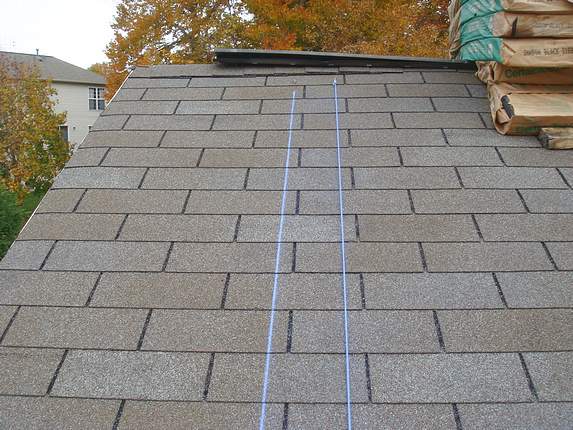 Chalk
lines: I always use chalk lines to keep the new shingles in perfect
alignment. Also notice that the joints are "staggered" to keep the new roof really
flat. Chalk
lines: I always use chalk lines to keep the new shingles in perfect
alignment. Also notice that the joints are "staggered" to keep the new roof really
flat.
|
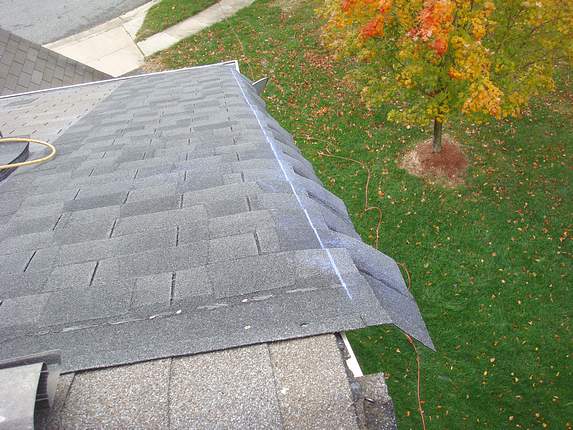 One of the cool things about this
method is that I can chalk a line for the rake edge and cut the shingles perfectly straight.
It looks great! One of the cool things about this
method is that I can chalk a line for the rake edge and cut the shingles perfectly straight.
It looks great! |
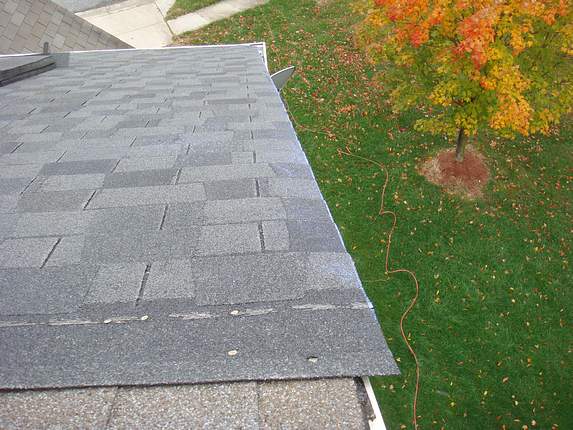 Cutting the Rake
Edges with a Hook Blade: After the edge has been chalked to overhang about one inch, we cut along
the line, using it as a guide. Now that's a really straight edge! Cutting the Rake
Edges with a Hook Blade: After the edge has been chalked to overhang about one inch, we cut along
the line, using it as a guide. Now that's a really straight edge! |
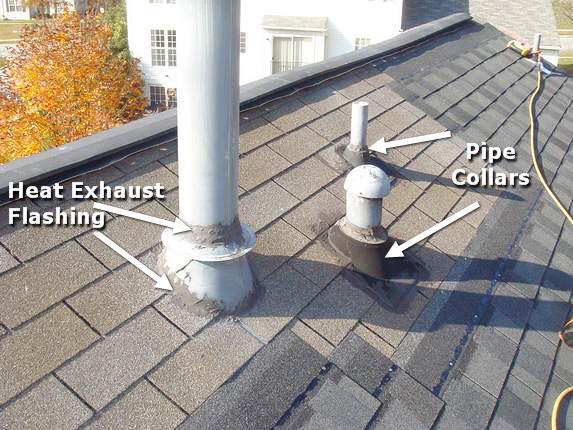 Too much Tar and
Goop! Notice all that tar that some other roofer
used to prevent leaks? Here's the correct formula: More tar smeared around = More
Leaks! Too much Tar and
Goop! Notice all that tar that some other roofer
used to prevent leaks? Here's the correct formula: More tar smeared around = More
Leaks!
I see this major roofing mistake made all the time, and I am amazed at the lack
of knowledge of my predecessors! |
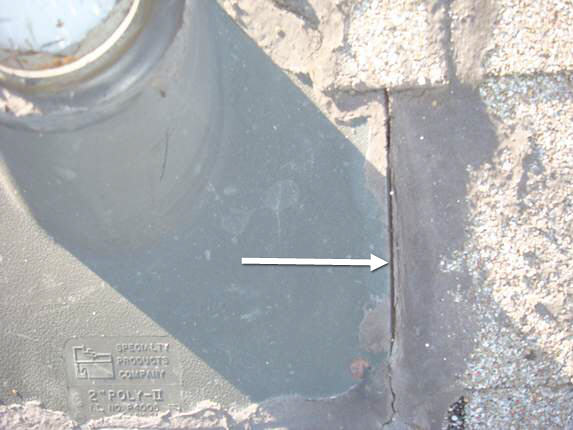 Big Roof Leak: This
tiny little crack was responsible for the drywall damage in the upstairs bedroom -- it's what
happens when an inexperienced "roofer" smears roofing tar all over a plastic or rubber pipe
collar. The petroleum distillates in the tar cause the plastic to distort; and, well you can
see what happened. Big Roof Leak: This
tiny little crack was responsible for the drywall damage in the upstairs bedroom -- it's what
happens when an inexperienced "roofer" smears roofing tar all over a plastic or rubber pipe
collar. The petroleum distillates in the tar cause the plastic to distort; and, well you can
see what happened. |
|
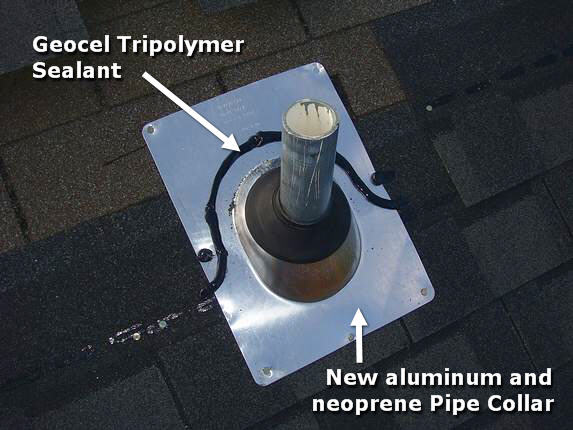 Geocel Tripolymer
Sealant: If it weren't for wind driven rain this sealant would not be
necessary; but in this area, it's a MUST. By the way, Geocel Tripolymer is the best
sealant on the market -- it's compatible with rubber and asphalt, and pretty much seals for a
lifetime . . . it's the only sealer we use. Geocel Tripolymer
Sealant: If it weren't for wind driven rain this sealant would not be
necessary; but in this area, it's a MUST. By the way, Geocel Tripolymer is the best
sealant on the market -- it's compatible with rubber and asphalt, and pretty much seals for a
lifetime . . . it's the only sealer we use.
|
 |
 |
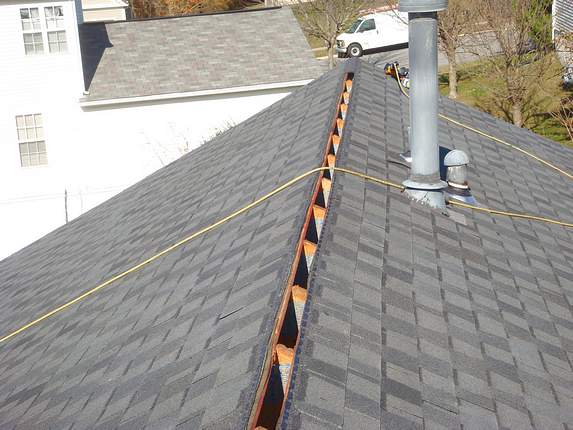 |
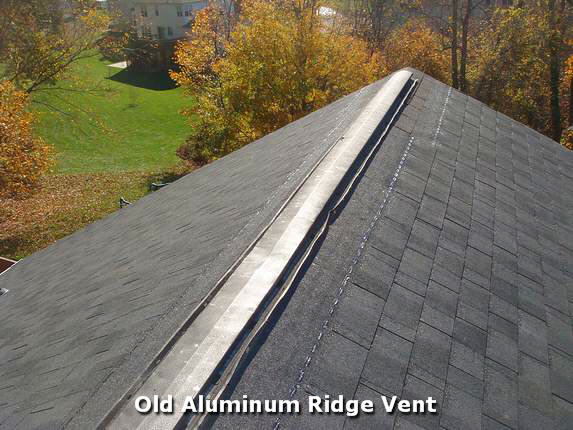
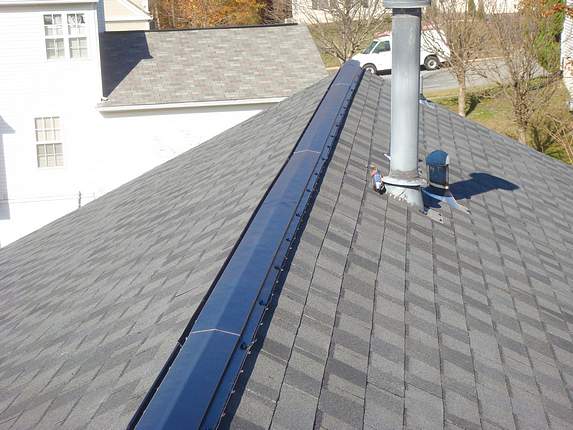
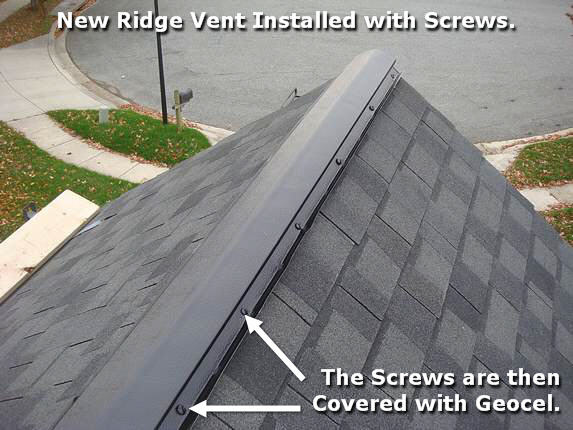
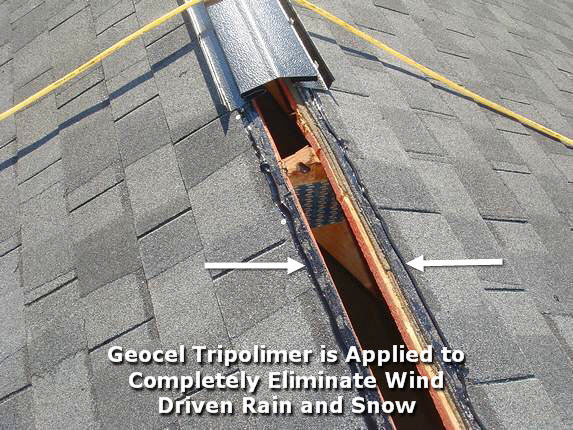 Sealing Down the
Metal Ridge Vent is a step almost all roofers just skip. It's necessary, but I'd say that
99% of the old vents I remove have no sealant! No, actually I think it's 99.9%! The
sealant helps preserve the underlayment and adds to the efficiency of the ridge vent
system. Sealing Down the
Metal Ridge Vent is a step almost all roofers just skip. It's necessary, but I'd say that
99% of the old vents I remove have no sealant! No, actually I think it's 99.9%! The
sealant helps preserve the underlayment and adds to the efficiency of the ridge vent
system. |
 |
 |
 |
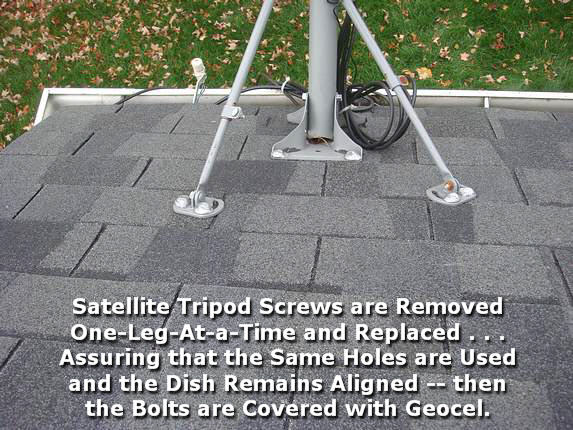 Satellite Dishes
mounted on the Roof can be kind of tricky, but we actually remove each let of the tripod --
one-at-a-time -- so that we can relocate the unit properly, in the same holes under the new
roofing. Then we seal the bolts with Geocel for a perfectly waterproof system. Satellite Dishes
mounted on the Roof can be kind of tricky, but we actually remove each let of the tripod --
one-at-a-time -- so that we can relocate the unit properly, in the same holes under the new
roofing. Then we seal the bolts with Geocel for a perfectly waterproof system. |
 Geocel Sealant again;
this time for covering the screw heads on the satellite tripod. Geocel Sealant again;
this time for covering the screw heads on the satellite tripod. |
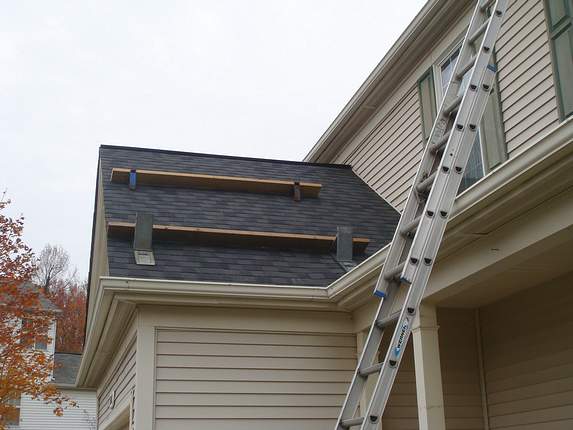
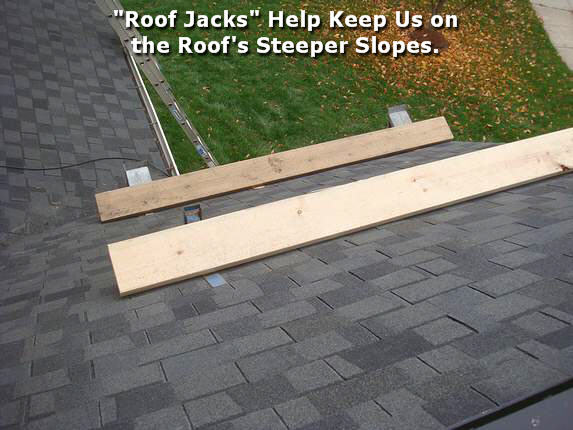 Roof Jacks are a good way to keep us
on the roof without damaging the new shingles; they fasten under the new shingle tabs so the
screws / nails don't penetrate the surface . . . Roof Jacks are a good way to keep us
on the roof without damaging the new shingles; they fasten under the new shingle tabs so the
screws / nails don't penetrate the surface . . . |
 |
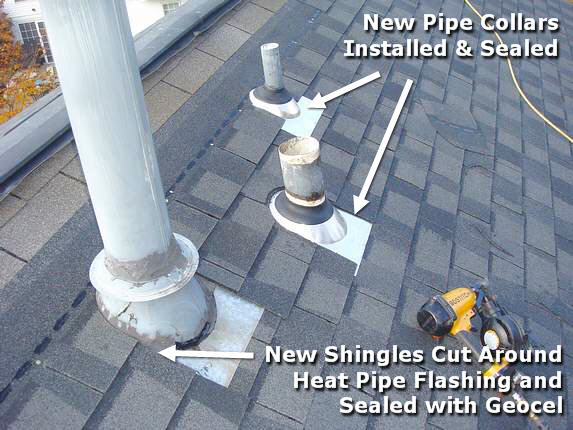
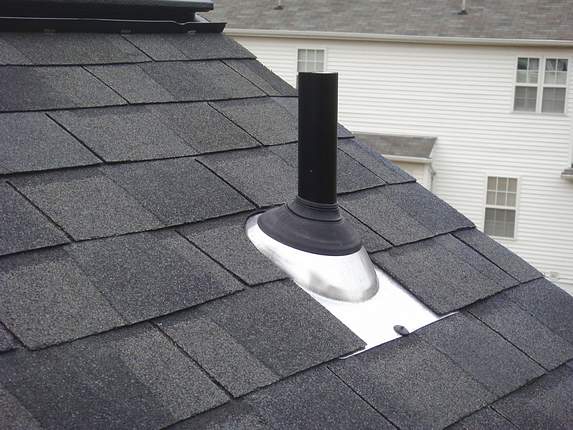
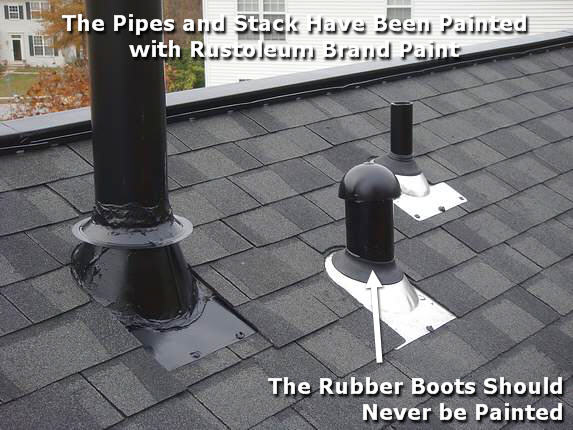 Rust Inhibiting Paint
on the Roof Pipes: On this project in Upper Marlboro, Maryland, we painted the pipes with
Rustoleum Brand Paint -- it's a great preservative and lasts forever. Notice that the rubber
boots weren't painted -- for the same reason you don't put tar on rubber and plastic. Rust Inhibiting Paint
on the Roof Pipes: On this project in Upper Marlboro, Maryland, we painted the pipes with
Rustoleum Brand Paint -- it's a great preservative and lasts forever. Notice that the rubber
boots weren't painted -- for the same reason you don't put tar on rubber and plastic. |
 |
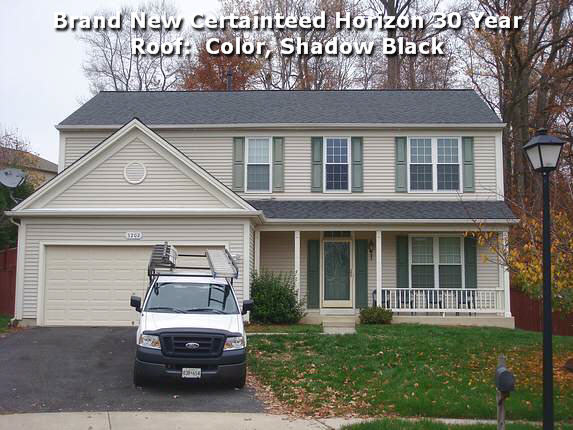 The new Certainteed
Horizon Roofing Shingles carry a manufacturer's warranty of 30 years, and Home
Restorations warrants the labor against leaks for ten (10) full years. The new Certainteed
Horizon Roofing Shingles carry a manufacturer's warranty of 30 years, and Home
Restorations warrants the labor against leaks for ten (10) full years. |

